

As hospitals and healthcare organizations roll into Q4, it’s the ideal time to take inventory of your patient monitoring devices.
You may be early in your fiscal year with money budgeted for new equipment. Or you might be near the end of the budget cycle facing a “use it or lose it” policy.
Either way, this quarter is the best time to walk the halls, check the supply closets, and make sure you’re ready for the months ahead.
How to take inventory of patient monitoring devices
The first step is figuring out what you might need and where the gaps are.
- Visit each unit in your hospital or facility. Record device type, model, serial or asset number, location and status (in service, spare, in repair).
- Note the last inspection date and whether your facility flags it as high-risk.
- Find out if the manufacturer still supports the model.
- Determine what runs out fastest: cables, sensors and accessories.
- Flag anything overdue for repair.
This gives you a good starting point to prepare a “shopping list” of devices, cables, and accessories.
How to prepare for flu and sickness season
The late fall and winter months can be busy for hospitals and medical facilities. It’s the height of flu season and germs spread at holiday gatherings.
An uptick in patients and medical needs isn’t the time to run out of cables or accessories or discover a critical device needs repaired. Be prepared now and avoid problems down the road.
How to combat rising equipment costs
We already know hospitals are feeling the strain of rising equipment costs.
According to the American Hospital Association, “total spending on supplies increased 9.9% through 2025, reflecting higher prices for everything from basic medical disposable gloves to pacemakers, ventilators and other technology that clinicians rely on every day.”
Add in tariffs and rising fuel prices, and healthcare technology managers like you will be stretching your budgets down to the penny.
How to avoid delays on orders of patient monitoring devices
Patients are relying on you and your medical team for the best patient care. Shipping delays and back orders aren’t an option.
You need high-quality equipment, backup supplies, and a device partner that understands your commitment to patient care.
It’s why we keep our warehouse stocked with patient monitoring device cables and accessories as well as refurbished equipment we can ship out the same business day.
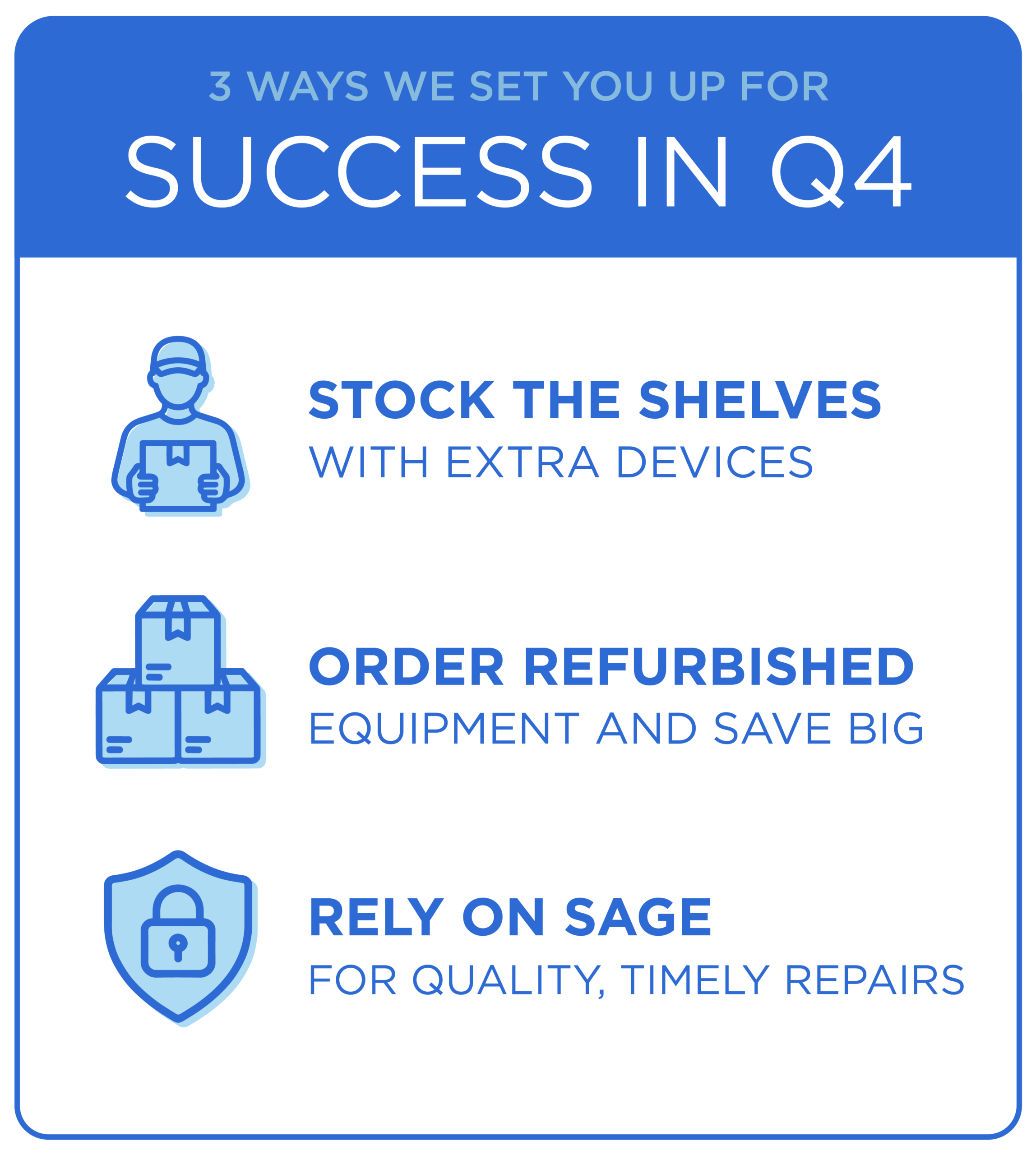
Here are 3 ways Sage Services Group can set you up for success in Q4.
- Stock the shelves with extra devices. It’s a given that certain devices will break or get lost in the coming months. Having a couple of extra items in your supply closet means your medical staff doesn’t miss a beat when it comes to patient care.
We recommend having extra telemetry devices and gas modules on hand. They often go missing, get misplaced, or get damaged beyond repair.
- Order refurbished equipment and save big. Our refurbished devices are good as new – and often at half the cost.
More healthcare facilities are turning to refurbished equipment as a cost-saving measure. A recent market research study reports the refurbished medical equipment market reached $19.4 billion in 2025. The market is expected to reach $62 billion by 2036 – just 10 years from now.
At Sage Services Group, all refurbished equipment is fully repaired, inspected, and tested in our state-of-the-art repair facilities. Each refurbished device meets today’s standards and is backed by a full warranty.
Buying refurbished devices is a responsible way to ensure you have backup items on hand while being smart with your budget. We have telemetry transmitters, bedside monitors, transport monitors, EKG machines, and more ready to ship.
- Rely on Sage Services Group for quality, timely repairs.
We can handle just about any medical equipment repair that lands in our facility. Our team is trained and experienced. We know you need your devices repaired and back in working order quickly.
When you send a device to Sage Services Group, you can rest assured our team gets right to work. We make the repair, test the device, and ship it out. Our average turnaround time is just 5-7 days.
So whether you have a new budget or some extra money to spend at the end of the budget cycle, let Sage Services Group help. We can help you determine what you need to buy or needs to be repaired so you’re prepared for the next busy season in healthcare.
Submit a repair request. Or shop our online catalog of cables and accessories.
–——————————-
FAQs about preparing your medical devices for Q4
- What should you include when taking inventory of patient monitoring devices?
Record each device’s type, model, serial or asset number, location and status, plus its last inspection date and whether your facility treats it as high-risk. Add whether the manufacturer still supports the model, and count cables, sensors and accessories along with the devices. Hospitals that use Joint Commission accreditation for deemed status must keep a written inventory of all medical equipment.
- When should hospitals stock up on patient monitoring cables and accessories before winter?
Before the flu season builds. The CDC says flu activity most often peaks between December and February, so Q4 is the window to find gaps while orders and repairs still have time to turn around. Sage ships in-stock cables and accessories
- Which patient monitoring devices should you keep spares of?
Start with your own history. Look at which devices went missing, were damaged or were borrowed between units last winter, and which failures would leave a unit without monitoring. In Sage’s experience, telemetry transmitters and gas modules are among the items that most often go missing or are damaged.
- Are refurbished patient monitors as reliable as new ones?
It depends on who refurbished them and how they were tested. Ask whether the facility is FDA-registered and ISO 13485-certified, then double check both the FDA registration database and IAF CertSearch. Ask what inspection and testing is documented for each unit, and get the warranty terms in writing. Sage repairs, inspects and tests every refurbished device in its own facilities.
- How long does a patient monitoring device repair take?
Sage’s normal turnaround time is 5 to 7 business days. To get an estimate for a specific device, submit a repair request.